When sourcing abrasives from a reliable sanding belt manufacturer, ceramic sanding belts are often positioned as the top-tier solution for metal grinding.
But what exactly are ceramic sanding belts used for?
The simple answer:
They are designed for high-pressure, high-efficiency grinding of hard metals.
The professional answer:
Ceramic sanding belts are used where maximum stock removal, long lifespan, and consistent cutting performance are required — especially in industrial environments.
Unlike traditional abrasives, ceramic grains micro-fracture during use, continuously exposing new sharp edges.
This means:
1. Consistent cutting performance
2. Less heat buildup
3. Longer lifespan
4. Higher efficiency per belt
Ceramic belts are not designed for light sanding.
They perform best when:
1. High pressure is applied
2. Grinding speed is optimized
3. The material is hard (e.g., stainless steel)
This is why professional sanding belt manufacturers recommend ceramic belts for industrial metalworking rather than general use.
Our ceramic sanding belts are available in:
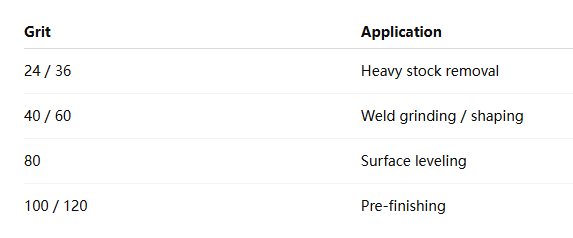
24 / 36 / 40 / 60 / 80 / 100 / 120 grit
Each grit serves a specific purpose:
Application: Removing weld seams on stainless steel
Why ceramic belts?
High hardness of stainless steel
Generates heat quickly
Requires aggressive cutting
Ceramic belts:
✔ Cut faster than zirconia
✔ Reduce heat discoloration
✔ Last significantly longer
Application: Removing large amounts of material
Typical industries:
1. Steel fabrication
2. Machinery manufacturing
3. Foundries
Ceramic belts excel because:
✔ They maintain cutting power under pressure
✔ Reduce downtime (fewer belt changes)
✔ Increase productivity
Application: Removing sharp edges and burrs
Recommended grit:
40 / 60 for aggressive deburring
80+ for smoother edges
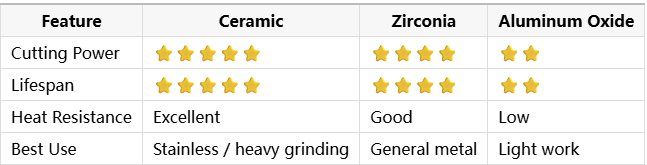
Ceramic sanding belts are the best choice for demanding industrial applications.
Many buyers compare ceramic belts with brands like 3M and VSM.
1. Comparable to 3M 984F in cutting performance
2. More aggressive grinding than VSM
3. Slightly less long-term stability vs VSM
What this means:
✔ Faster cutting
✔ Lower cost per part
✔ Ideal for production environments
Choosing the right sanding belt manufacturer is critical because:
Not all ceramic belts are equal.
A high-quality manufacturer ensures:
1. Uniform grain distribution
2. Strong resin bonding
3. Durable Y-weight backing
4. Stable performance across batches
Ceramic belts need pressure to activate cutting performance
Start coarse → move finer
Avoid overheating by optimizing speed
Use ceramic only for heavy-duty metal grinding
If you are looking for a reliable sanding belt manufacturer specializing in metal grinding:
You can explore our full range of ceramic sanding belts here:
https://www.liyingsandbelt.com/
We provide:
1. Ceramic sanding belts (24–120 grit)
2. High cutting efficiency
3. Y-weight heavy-duty backing
4. Designed for industrial applications
Application: Surface preparation for pipes
✔ Removes oxidation layers
✔ Prepares for polishing
✔ Improves surface consistency
So, what are ceramic sanding belts used for?
They are used wherever:
✔ High-pressure grinding is required
✔ Hard metals need to be processed
✔ Efficiency and lifespan matter
In short:
Ceramic sanding belts are the best choice for serious metal grinding.